Introduction: More Than a Stone, A Symbol of the Infinite
Walk into any Shiva temple in India and your eyes are almost always drawn to one thing first — the Shivling standing quietly at the center, often bathed in milk, water, or bel patra. To a casual visitor, it may look like a simple stone form. But to those who have studied Sanatan Dharma closely, the Shivling is one of the most profound spiritual symbols ever conceived — a representation of the formless, infinite, and eternal nature of existence itself.

For centuries, saints, scholars, and everyday devotees have quietly practiced traditions and observed details around the Shivling that rarely get discussed outside temple walls or guru lineages. Genuine devotees who wish to bring this energy home often choose to buy original Rudraksha and an authentic Shivling together, since both are considered complementary tools for deepening one's connection with Lord Shiva. This guide uncovers seven such hidden secrets — practical, spiritual, and historical — that every seeker, devotee, or curious mind should know.
1. Shivling Means "Symbol of the Infinite"
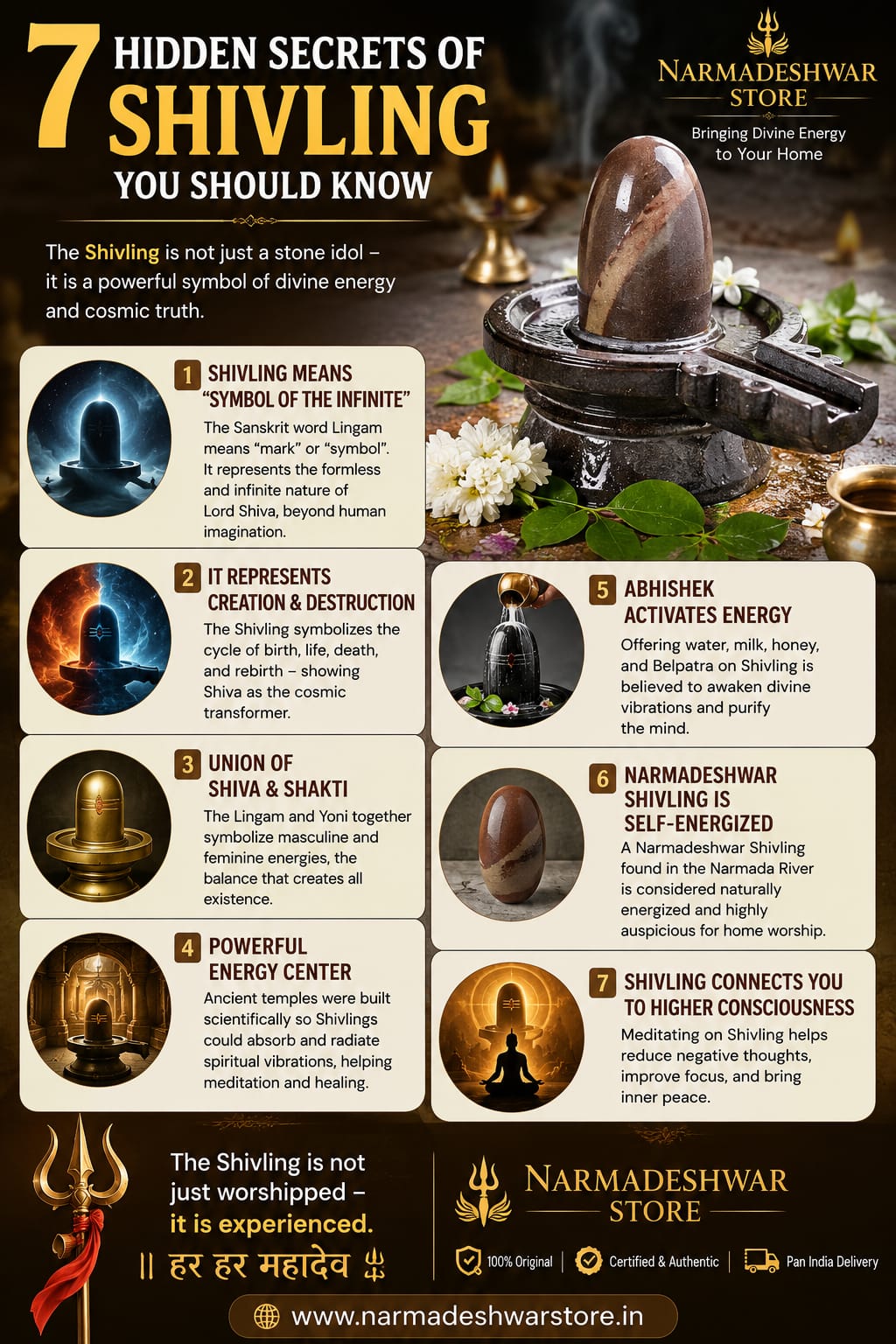
The Sanskrit word Lingam translates to "mark" or "symbol." It does not depict a literal shape in the way most idols represent a deity's physical form. Instead, it represents the formless and infinite nature of Lord Shiva — a being beyond birth, death, gender, and human imagination. Ancient texts describe Shiva as Nirakar (formless), and the Shivling is the closest human attempt to give that formlessness a meditative focal point. When a devotee sits before a Shivling, they are not worshipping a shape; they are contemplating the boundless universe itself, condensed into a single, still point.
2. It Represents the Union of Shiva and Shakti
One of the least discussed aspects of the Shivling is its symbolic structure. The cylindrical form represents Shiva, the masculine cosmic consciousness, while the base — known as the Yoni or Peetha — represents Shakti, the feminine creative energy. Together, they signify the union of consciousness and energy, the two forces believed to have created and sustained the universe. This isn't a minor detail; it's central to understanding why the Shivling is worshipped as a symbol of creation, balance, and cosmic harmony rather than a solitary or one-dimensional deity.
3. Narmadeshwar Shivling Is Considered the Most Sacred and Naturally Formed Lingam
Among the many types of Shivlings worshipped across India, the Narmadeshwar Shivling holds a uniquely revered status. Unlike hand-carved idols, these are naturally formed stones found in the riverbed of the sacred Narmada River in Madhya Pradesh. Hindu scriptures state that every pebble in the Narmada is inherently sacred and considered a manifestation of Shiva himself, without the need for additional consecration rituals (Pran Pratishtha) that other idols require. This is one reason serious devotees take care to learn how to identify an original Narmadeshwar Shivling before buying one, since the natural formation, color, and texture of a genuine stone differ noticeably from artificial replicas sold in the wider market.
4. It Is Believed to Be a Powerful Source of Cosmic Energy
Many devotees and spiritual practitioners believe the Shivling emits a subtle but steady form of cosmic or vibrational energy, often compared to the calm, grounding frequency associated with meditation and deep stillness. This is why Shivlings are traditionally placed in quiet corners of temples and homes, away from clutter or noise. Regular worship — offering water, milk, or bel patra — is thought to activate and circulate this energy through the home, gradually neutralizing stress and negativity for those who live there. This is closely tied to why so many households also keep other energy-amplifying items like a sphatik mala or a consecrated Rudraksha nearby, since they are believed to work in harmony with the Shivling's vibration.
5. Chanting Before a Shivling Is Believed to Awaken Inner Consciousness
While simple worship is common, many seekers go a step further and chant specific mantras before a Shivling to deepen their meditative focus. The Mahamrityunjaya Mantra, in particular, is closely associated with Shivling worship and is chanted for protection, healing, and inner strength. Understanding the benefits, significance, and chanting method of the Mahamrityunjaya Mantra can make this practice far more meaningful, since incorrect pronunciation or hurried repetition is believed to reduce its spiritual effect. Devotees often describe this combination — a quiet Shivling and a slow, deliberate mantra — as one of the most grounding rituals in their daily routine.
6. Monday (Somwar) Holds Special Significance for Shivling Worship
Monday is traditionally associated with Lord Shiva, and worshipping the Shivling on Monday is believed to carry amplified spiritual benefits. Many devotees observe a Somwar Vrat (Monday fast) alongside Shivling puja, believing it accelerates the fulfillment of wishes related to health, relationships, and inner peace. This tradition becomes even more significant during the holy month of Sawan, when the importance of Rudraksha and Shivling in Sawan is considered highest, and temples across India see a dramatic rise in footfall as devotees seek blessings during this auspicious period.
7. Keeping a Shivling at Home Comes With Sacred Rules
Not everyone realizes that placing a Shivling at home isn't as simple as buying one and setting it on a shelf. Scriptures outline specific guidelines — the size of the Shivling, its placement direction, the type of water used for abhishek, and even how many Shivlings should be kept in one household. Because of this, many first-time buyers take time to understand whether they should keep a Shivling at home at all, and if so, how to do it correctly according to Vastu and traditional practice. Getting these details wrong is believed to disturb the calm energy the Shivling is meant to bring, which is why guidance from an experienced source matters more than convenience shopping.
Why the Shivling Continues to Fascinate Devotees Today
In a fast-paced, digitally distracted world, the Shivling remains one of the rare spiritual symbols that asks for nothing but stillness. It doesn't demand elaborate rituals to hold meaning — a few minutes of quiet water offering and focused breathing can be enough to feel its calming presence. This is perhaps why modern seekers, even those new to spirituality, find themselves drawn to keeping one at home or at their workplace. For many, exploring a simple guide for spiritual seekers is often the first step before committing to daily Shivling worship, since understanding the "why" behind a practice tends to make the "how" far more meaningful.
There's also a deeper family dimension to this worship. Traditionally, Shiva is not worshipped in isolation — the benefits of worshipping the divine Shiva family, including Parvati, Ganesha, and Kartikeya, are considered to bring balance to different areas of life, from relationships to career to emotional wellbeing. A Shivling, in many homes, becomes the anchor point for this broader family worship rather than a standalone ritual object.
How to Worship a Shivling at Home: A Simple Daily Practice
For those new to this practice, the ritual doesn't need to be complicated:
● Clean the Shivling gently with fresh water each morning, ideally before sunrise or shortly after
● Offer a few drops of raw milk followed by clean water, symbolizing purification
● Add bel patra (bael leaves) if available, as they are considered especially dear to Shiva
● Light a diya or incense stick and sit quietly for a few minutes of focused breathing or mantra chanting
● Avoid loud conversations or distractions in the space immediately around the Shivling
Consistency matters more than grandeur here. A short, sincere daily practice is considered far more powerful than an elaborate ritual performed only occasionally.
Choosing an Authentic Shivling for Your Home
Given how many replicas and synthetic versions are sold online today, choosing an authentic Shivling is one of the most important decisions a devotee will make. A genuine Narmadeshwar Shivling — sourced directly from the Narmada riverbed and considered a divine gift from the Narmada River itself — carries a natural smoothness, subtle color variation, and density that machine-made or resin copies simply cannot replicate. Reviewing a few things to keep in mind while buying spiritual products online can help new buyers avoid common mistakes, from unclear sourcing claims to inconsistent sizing, before making a purchase they'll keep in their home for years.
Many devotees also pair their Shivling with a Rudraksha mala worn daily or kept near the puja space, since both are considered to work together in creating what some describe as the sacred connection between the wearer and Lord Shiva. This combination — a Shivling for the home and Rudraksha for the self — is one of the oldest and most widely followed spiritual pairings in Sanatan Dharma.
FAQs Note
The FAQs below have been written specifically to address the most common questions raised by spiritual seekers exploring Shivling worship for the first time. They follow current search intent and are structured to be genuinely informative rather than generic, in keeping with updated content quality expectations.
Frequently Asked Questions
1. What does the word "Shivling" actually mean?
The word Lingam means "mark" or "symbol" in Sanskrit. It represents the formless, infinite nature of Lord Shiva rather than a literal physical depiction of the deity.
2. Is a Narmadeshwar Shivling different from other types of Shivlings?
Yes. A Narmadeshwar Shivling is naturally formed by centuries of water flow in the Narmada River, unlike hand-carved Shivlings made from other stones. It's considered self-manifested and doesn't require additional consecration rituals.
3. Can I keep a Shivling at home without a priest performing rituals?
Yes, many households keep a Shivling at home and perform simple daily worship themselves. However, it's worth understanding the placement rules and care guidelines before doing so, since incorrect placement is believed to disturb its energy.
4. Why is Monday considered special for Shivling worship?
Monday, or Somwar, is traditionally dedicated to Lord Shiva. Worshipping the Shivling on this day, especially with a fast, is believed to bring amplified benefits for health, peace, and relationships.
5. Should I wear Rudraksha along with keeping a Shivling at home?
Many devotees do both, as the two are considered complementary. A Shivling anchors the home's spiritual energy, while Rudraksha is worn to carry a similar protective and calming influence with the individual throughout the day.
Final Thoughts: A Symbol Worth Understanding Deeply
The Shivling is far more than an object of worship — it is a compressed representation of infinity, balance, and cosmic energy that has held spiritual significance for thousands of years. Whether you're drawn to it for its historical depth, its symbolic meaning, or the calm it brings to a home, understanding these seven hidden secrets can transform a simple ritual into a deeply meaningful daily practice.
If you're ready to bring this energy into your own space, take the time to source an authentic, naturally formed Shivling and pair it with genuine Rudraksha for a complete spiritual practice rooted in tradition rather than trend.