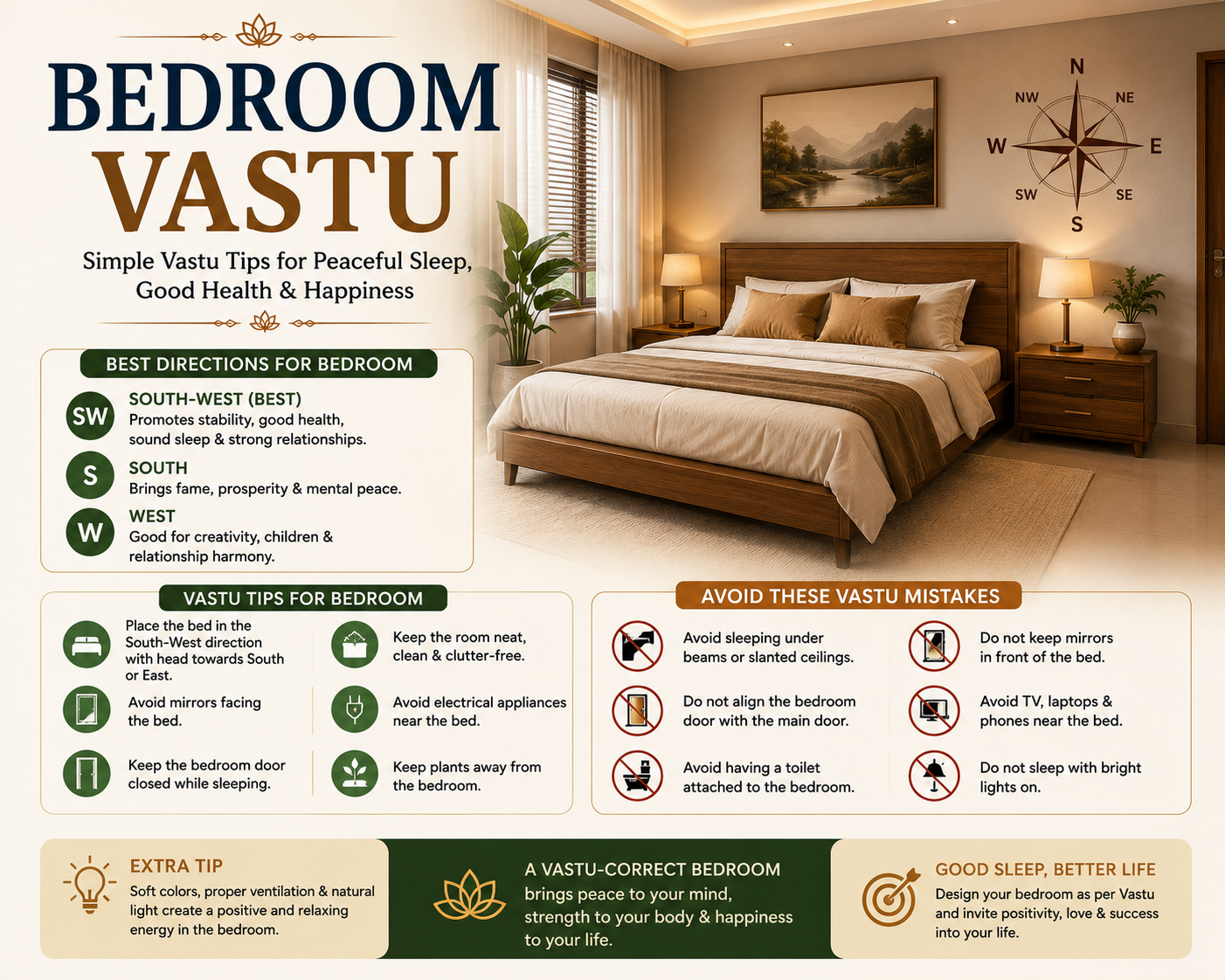
Introduction: Why Bedroom Vastu Deserves More Attention Than It Gets
Of all the rooms in a home, the bedroom is where people spend the largest single block of uninterrupted time, yet it is often the least thoughtfully planned from a Vastu perspective. Living rooms get styled for guests, kitchens get optimized for workflow, and puja rooms get carefully aligned to the correct direction — but bedrooms are frequently arranged around whatever furniture fits, with little regard for direction, bed placement, or the subtler energy principles that Vastu Shastra associates with rest, relationships, and health.
Bedroom Vastu is built on a simple premise: sleep is not a passive activity, and the room you sleep in either supports or quietly disrupts your body's ability to fully rest and recover. Poor sleep, recurring tension between partners, low energy, and even financial stress are all patterns that traditional Vastu practitioners frequently trace back to bedroom layout issues — direction, bed position, mirror placement, and clutter being the most common culprits. For readers new to this framework, A Simple Guide for Spiritual Seekers is a helpful starting point before diving into room-specific guidance like this one.
This article covers the ideal direction for a bedroom, correct bed placement, mirror and color guidelines, common doshas that affect sleep and relationships, and practical remedies for homes where the ideal layout isn't available.
Why Bedroom Direction Affects More Than Just Sleep
In Vastu Shastra, each direction is associated with specific elements and energies, and the bedroom's placement within the home is believed to directly influence the physical and emotional state of the people sleeping in it. Because sleep is when the body repairs itself and the mind processes the day, Vastu treats the bedroom as an especially sensitive zone — one where even minor misalignments are thought to compound over months and years into chronic fatigue, irritability, or strained relationships.
This is also why so many couples experiencing unexplained tension, or individuals dealing with persistent low mood, are advised to review their bedroom setup before assuming the issue is purely situational. If sleep quality and emotional heaviness have been a recurring struggle, it can help to look at this alongside broader guidance such as Depression and Spiritual Healing, since Vastu, sleep hygiene, and emotional wellbeing are often more interconnected than people initially assume.
Ideal Direction for the Master Bedroom
Vastu Shastra offers fairly specific guidance on where within a home the master bedroom should ideally be located, based on the head of the household's role in maintaining stability and authority in the home.
• South-West direction: Considered the single best location for the master bedroom, associated with stability, strength, and authority within the household.
• South direction: A strong secondary option, linked to good health and restful sleep.
• West direction: Generally acceptable and associated with steady gains and satisfaction.
• North-East direction: Traditionally avoided for a bedroom, since this zone is considered better suited to meditation and worship rather than sleep.
• South-East direction: Also generally avoided, since this zone is associated with the fire element and considered too energetically active for a resting space.
Children's bedrooms and guest rooms follow slightly different guidelines. A North-West bedroom is often recommended for children, since this direction is associated with mental agility and creativity, while a West-facing room is considered appropriate for guests, symbolizing hospitality without long-term energetic investment in the space.
Correct Bed Placement: The Details That Matter Most
1. Sleep with Your Head Facing South
Among all bedroom Vastu guidelines, head direction during sleep is considered one of the most important. Sleeping with the head towards the South is widely regarded as the most beneficial position, believed to align the body's magnetic field harmoniously and support deeper, more restorative sleep. Sleeping with the head towards the North is traditionally discouraged, since it is believed to disrupt the body's natural energy flow and can be associated with restlessness or poor-quality sleep.
2. Avoid Placing the Bed Directly Under a Beam
A bed positioned directly beneath an exposed ceiling beam is considered a significant Vastu concern, believed to create a subtle, constant sense of pressure on whoever sleeps beneath it. If repositioning isn't possible, a false ceiling is often recommended as a practical remedy.
3. Keep the Bed Away from the Door Line
The bed should never be placed directly in line with the bedroom door, nor should the feet point directly toward the door while sleeping, since this alignment is traditionally associated with restless sleep and a sense of vulnerability, even subconsciously.
4. Leave Space on Both Sides of the Bed
For couples, having accessible space on both sides of the bed is considered symbolically important, representing balance and equal footing within the relationship. A bed pushed against a wall on one side, forcing one partner to climb over the other, is traditionally seen as a subtle contributor to imbalance or friction between partners.
Mirror and Furniture Placement Guidelines
Mirrors are treated with particular caution in Vastu-guided bedrooms, largely because of the belief that they amplify and reflect energy in ways that can either support or disrupt rest, depending on placement.
• Avoid placing a mirror directly facing the bed, since it is believed to create restless sleep and, in some traditions, is associated with strain in relationships.
• If a mirror must be in the room, keep it on a side wall rather than directly opposite the bed, or cover it at night.
• Avoid keeping a television directly facing the bed for similar reasons, since screens are treated similarly to mirrors in terms of reflected and restless energy.
• Storage units, wardrobes, and heavy furniture are best placed along the South or West walls, keeping the North and East relatively open and light.
• Avoid placing plants inside the bedroom, since most traditional guidance considers them more suitable for living spaces than for a room meant purely for rest.
Color and Element Guidelines for a Restful Bedroom
Color plays a meaningful role in Vastu-guided bedroom design, not purely for aesthetics but for the calming or stimulating effect certain tones are believed to have on the nervous system during rest.
• Soft, muted tones such as light blue, pale green, soft pink, or warm beige are generally recommended for bedroom walls, since they're associated with calm and emotional balance.
• Bright reds, blacks, and overly dark colors are traditionally discouraged for bedroom walls, since they're considered too energetically intense for a space meant for rest.
• Natural materials such as wood are preferred for bedroom furniture over excessive metal or glass, which are considered energetically harder and less conducive to relaxation.
Vastu Remedies for Common Bedroom-Related Issues
Issue 1: Persistent Sleep Disturbances or Restlessness
When bed and room positioning have already been corrected but sleep issues persist, many practitioners recommend keeping a calming natural object such as a Sphatik cluster near the bedside table. The Spiritual and Scientific Benefits of a Sphatik Mala (Crystal Rosary) outlines why this particular material is so widely used for calming, clarity-supporting purposes, both in traditional practice and in more contemporary wellness contexts.
Issue 2: Recurring Tension or Distance Between Partners
Beyond correcting bed placement and avoiding facing mirrors, Vastu tradition also recommends keeping the bedroom free of symbols associated with solitude, such as single images or artwork depicting isolated figures, and instead favoring paired or harmonious imagery. For couples experiencing more persistent strain, it can help to look at dedicated guidance such as Spiritual Remedies for Love Marriage for a broader set of remedies that go beyond room layout alone.
Issue 3: Delay in Marriage for Unmarried Individuals
For unmarried adults, the direction and setup of their personal bedroom is often examined closely in traditional consultations, particularly if other life areas seem otherwise stable. If marriage prospects have felt unusually delayed despite no obvious external cause, the detailed remedies covered in Effective Remedies to Remove Delay in Marriage are often recommended alongside basic bedroom corrections such as decluttering and correcting bed direction.
Issue 4: A General Sense of Heaviness or Unease in the Room
Bedrooms that consistently feel heavy or unwelcoming despite reasonable upkeep are sometimes linked to accumulated negative energy, particularly in older homes or rooms that previously served a different purpose. Reviewing the broader signs and remedies in Signs of Negative Energy at Home and How to Clear It is a sensible first step, and for those seeking additional protective measures, understanding What Is a Black Obsidian Bracelet can offer insight into how certain protective stones are traditionally used to absorb and neutralize this kind of lingering heaviness.
Common Bedroom Vastu Mistakes to Avoid
• Sleeping with the head towards the North, which is one of the most commonly overlooked yet frequently cited Vastu concerns.
• Keeping a workspace or study desk inside the same room without a clear visual separation from the sleeping area.
• Storing old, broken, or unused items under the bed, which is believed to trap stagnant energy directly beneath the sleeper.
• Overcrowding the room with excess furniture, leaving little open space for energy to circulate.
• Keeping fresh water fountains or aquariums in the bedroom, which are generally considered more suitable for living or office spaces.
• Leaving the bedroom door creaky, broken, or unable to close fully, which is treated similarly to other entrance-related Vastu concerns in the home.
Should You Keep Spiritual or Protective Items in the Bedroom?
This is a nuanced area of Vastu guidance, since not every spiritual item traditionally recommended for a puja room is considered appropriate for a bedroom. Idols of deities and Shivlings, for instance, are generally advised to stay in a dedicated worship space rather than the bedroom. However, certain protective and calming items are widely considered suitable for bedside placement, including a small Sphatik piece, a Rudraksha kept respectfully in a drawer rather than worn during sleep, or a simple Evil Eye symbol near the door for protection against negative energy entering the space. Anyone building out this kind of setup should be selective about sourcing, since the guidance in Things to Keep in Mind While Buying Spiritual Products Online is particularly relevant given how frequently unverified or synthetic products are sold as authentic.
For those wanting to build a small, thoughtfully sourced collection of protective and calming bedroom items, exploring an authentic Rudraksha selection is a reasonable starting point, provided the pieces are kept appropriately rather than worn during sleep, since most traditional guidance recommends removing such items before resting.
Does Bedroom Vastu Actually Improve Sleep and Relationships?
It's worth being transparent that Vastu Shastra is a traditional belief system rooted in centuries of architectural and spiritual practice, not a scientifically validated discipline, and its claims shouldn't be treated as clinical fact. That said, many of its practical recommendations — reducing clutter, avoiding harsh colors, minimizing screen exposure near the bed, and creating a calm, organized sleeping environment — align closely with well-established modern sleep hygiene principles. Whether the benefit comes from energetic alignment, psychological comfort, or simply a cleaner and more intentional space, most people who apply these principles consistently do report a noticeable improvement in how restful their bedroom feels.
Frequently Asked Questions (FAQs)
1. What is the best direction to sleep in, according to Vastu?
Sleeping with the head towards the South is considered the most beneficial direction, followed by East. Sleeping with the head towards the North is generally discouraged in Vastu tradition.
2. Where should the master bedroom be located in the house?
The South-West direction is considered the most suitable location for the master bedroom, since it is associated with stability, strength, and the authority of the head of the household.
3. Is it bad to have a mirror in the bedroom according to Vastu?
A mirror itself isn't considered problematic, but placing it directly facing the bed is traditionally discouraged, since it's believed to create restless energy. Positioning it on a side wall, or covering it at night, is the commonly recommended fix.
4. Can bedroom Vastu really affect a couple's relationship?
Vastu tradition draws a strong connection between bedroom layout — particularly bed placement, mirror positioning, and clutter — and relationship harmony, though this is a traditional belief rather than a scientifically proven claim. Many couples do report improved comfort and connection after decluttering and correcting basic layout issues.
5. What should I do if my bedroom's direction can't be changed?
Since relocating a bedroom is rarely practical, most Vastu guidance focuses on correcting what's within control — bed placement, head direction during sleep, mirror positioning, decluttering, and color choices — which can meaningfully offset a less-than-ideal room direction.
6. Note for Readers
This article is intended for general informational and traditional-knowledge purposes only. Vastu Shastra is a belief system rooted in ancient Indian architectural tradition, and its principles are not scientifically proven. Readers dealing with persistent sleep issues, anxiety, or relationship difficulties are encouraged to also consult a qualified medical or mental health professional, since these guidelines are meant to complement, not replace, professional care.
Final Thoughts: A Calm Bedroom Is the Foundation of a Calm Life
Bedroom Vastu isn't about achieving a picture-perfect, textbook-aligned room — it's about recognizing that the space where you spend roughly a third of your life deserves the same intentionality as any other part of your home. Small, achievable corrections like adjusting head direction during sleep, repositioning a mirror, clearing clutter from under the bed, and choosing calmer colors can meaningfully shift how restorative your sleep feels over time.
For those looking to complete their bedroom's energy with authentic, thoughtfully sourced spiritual items, exploring a trusted collection to Buy Original Rudraksha is a good next step, ensuring that anything you bring into such a personal, restorative space is genuine and aligned with the calm you're trying to build.